
Like me, you may have heard all about the potential benefits of doing yoga during pregnancy, like easing aches, helping with breathing, and supposedly keeping you calm and collected when labour finally arrives. So naturally, I’ve thrown myself into some evening yoga in the hope that it might soothe some of the delightful array of pregnancy aches. The ultimate goal, of course, is that it will somehow make the whole labour experience a little less traumatising for my body. But does it actually work? I can’t answer the labour part just yet, but here’s what I’ve experienced so far.
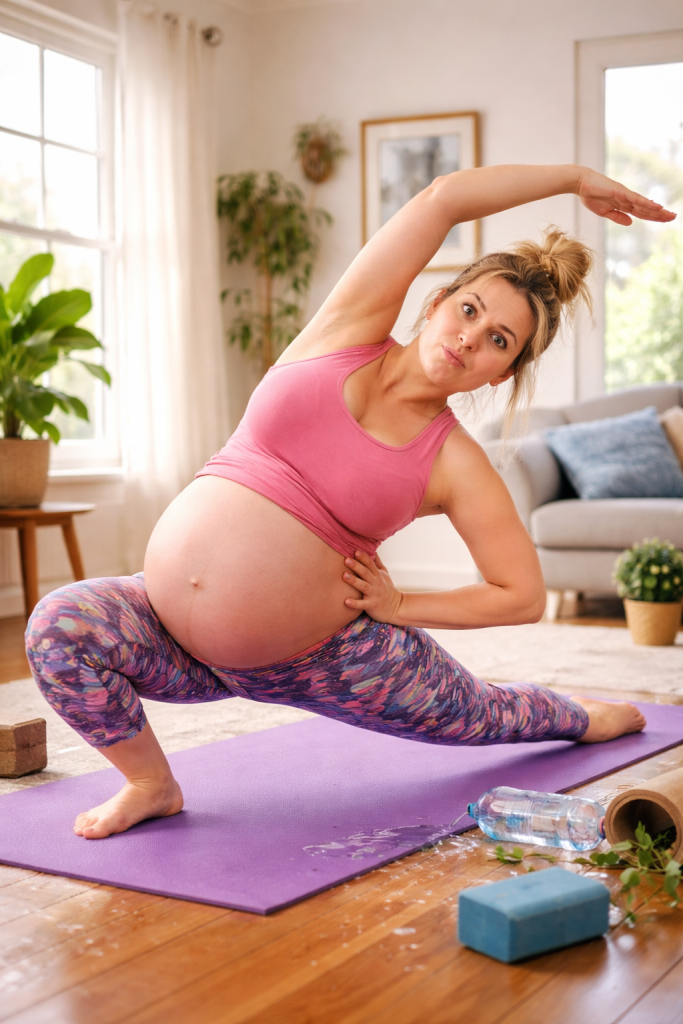
Before I go any further, when I say “I’m doing yoga in the evenings,” what I really mean is: I’m sprawled across the living-room floor on my yoga mat, following a very lovely YouTube lady who insists I’m “doing great” and reminds me how “empowering” my body is. You might have a completely different experience in a real, face to face class, and it’s probably more advisable for beginners so someone can help with posture. But personally, I enjoy doing it on my own schedule. Plus, I’d much rather be rolling around on the floor in the privacy of my own home.
I initially looked around for some gentle daily pregnancy-specific sessions. Keep in mind that not all stretches will be safe during pregnancy, so selecting classes that are designed specifically for pregnancy is a safer option. Some sessions are longer, around 45 minutes to an hour, and some are much shorter. I’ve been doing around 20-minute sessions most evenings. The stretches seem to cover everything from back, legs, hips, and chest. I’m really not the most flexible person in the world, but I can manage most of it, even if some positions are slightly tricker for me than others.
What I have found more difficult is the breathing techniques. I can’t seem to get the hang of controlling my breathing at certain points, which is ironically one of the most important parts of labour. I’m hoping that will come with more practice, though. While I started out sticking to the standard stretches with no equipment, there are some sessions that utilise different types of equipment, so if you’d prefer to have the option of variety in your sessions, some equipment like yoga blocks and straps might come in handy.
After a few weeks of using no equipment at all, I decided to invest in a yoga exercise ball (no need to opt for a more expensive birthing ball as they all do the same thing) to see if that made a difference. I would definitely recommend getting one of these. There are so many useful daily exercises that can be done with these, that not only help relieve a lot of the daily pains, but also help with labour preparation. Even just sitting on the ball watching tv forces you to sit in a more upright position, rather than slouching on the sofa. Many women tend to opt for these when in labour too, showing just how useful they can be at relieving pressure.

I have definitely noticed that I always feel better after a session. Less sluggish, slightly stronger, and just more like my pre-pregnancy self. After taking time off from all exercises over Christmas, I also noticed more aches and twinges appeared than when I was practicing regularly. So, while I can’t claim it’s transformed my sleep or mental wellbeing (though I know plenty of people swear it does), it definitely seems to help with those day-to-day pregnancy aches.
Exercise in pregnancy is good for you in general, so even if it doesn’t turn you into a serene, pain-free birthing pro, you’re still getting something out of it. One piece of advice I would give to anyone thinking of taking up yoga in pregnancy, which I’m sure all yoga instructors would repeat, is to listen to your body. I’m aware I’m a complete novice, so I don’t try and push myself and my body too much. There are some stretches I can do quite comfortably, whilst others I’m still slowly working my way into. At the end of the day, every pregnancy and every body is different. So focus on yourself and what your body needs and I don’t think you’ll go far wrong.
Your Camo Wife
 Camo Wife Chronicles
Leave a comment